
Tina Butler · 27 September 2026
Adapting Open Security Protocols for Remote Work Environments in Financial Institutions
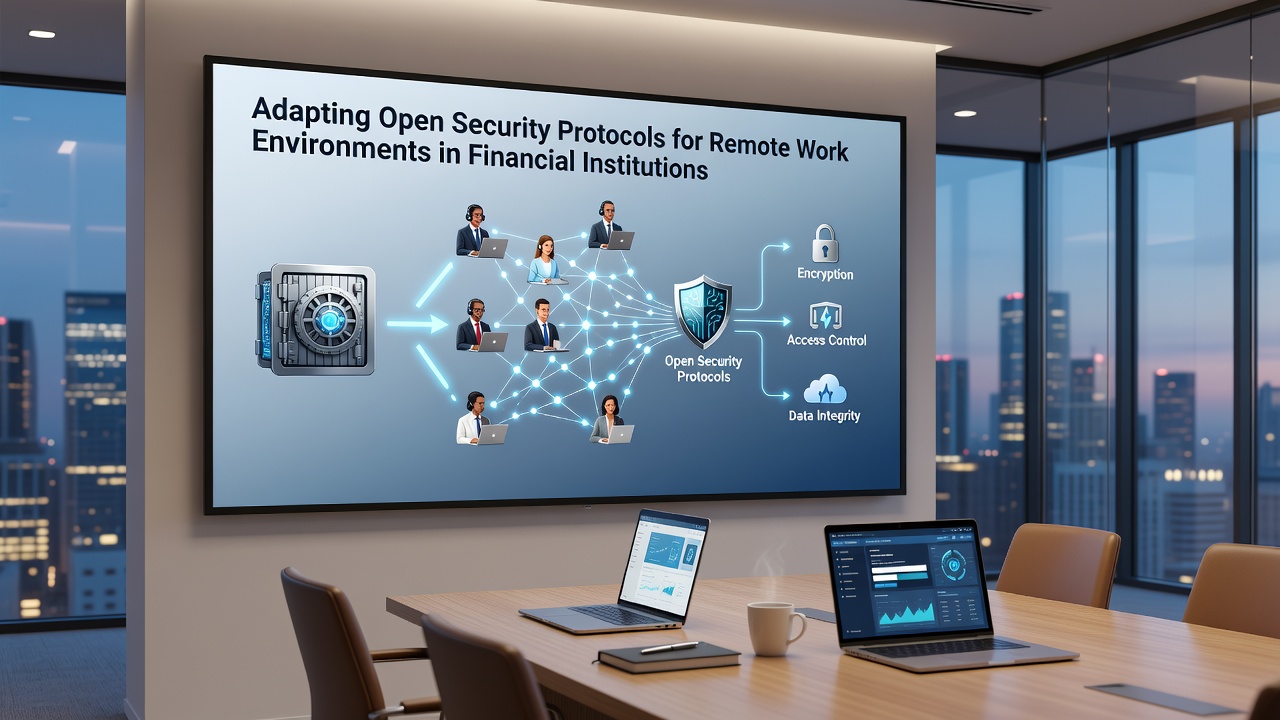
Financial institutions expanded remote work arrangements substantially after 2020, which required updates to longstanding security measures that relied on perimeter-based defenses, and observers note that open security protocols such as TLS 1.3, OAuth 2.0, and FIDO2 standards gained wider adoption because they support interoperability across diverse endpoints without proprietary lock-in.
Researchers at multiple universities documented how these protocols enable encrypted tunnels and multi-factor authentication flows that scale for distributed teams, while data from regulatory filings shows banks integrating them with zero-trust architectures to verify every access request regardless of location.
Remote Work Pressures on Traditional Defenses
Legacy virtual private networks often created bottlenecks when thousands of employees connected simultaneously, and studies from academic sources indicate that open alternatives like WireGuard reduced latency by up to 30 percent in controlled tests conducted through 2025, yet institutions still faced challenges with certificate management and key rotation across global offices.
Those who've examined breach reports from the period observe that phishing incidents targeting remote staff rose sharply, prompting adoption of hardware-bound authenticators that align with open standards rather than vendor-specific solutions.
Core Open Protocols in Practice
Institutions typically layer Transport Layer Security 1.3 for all external connections, then overlay OAuth 2.0 flows with short-lived tokens to limit exposure windows, and experts have observed that combining these with OpenID Connect allows seamless single sign-on across cloud services while maintaining audit trails required by auditors.
Implementation teams often deploy automated certificate authorities based on open specifications to issue and revoke credentials in real time, which supports the frequent device changes common in hybrid schedules.
Regulatory Developments Through 2026
Guidelines released by the Australian Prudential Regulation Authority emphasize continuous monitoring of remote sessions, and similar expectations appear in updates from the European Banking Authority that stress open standards for interoperability testing, while reports scheduled for September 2026 from the Bank for International Settlements are projected to include metrics on protocol adoption rates across member jurisdictions.
Compliance officers track these evolving requirements by mapping internal controls directly to open protocol specifications, which simplifies audits because the underlying code and specifications remain publicly reviewable.
Integration Approaches Across Institutions
One large North American bank phased in FIDO2 passkeys for executive remote access during 2024 and 2025, resulting in measurable drops in credential-sharing incidents according to internal metrics shared with regulators, and comparable programs in Canadian credit unions incorporated open-source key management tools to handle device fleets without additional licensing costs.
Network architects frequently combine these protocols with software-defined perimeters that enforce least-privilege access, allowing analysts to review logs through centralized platforms that accept standardized event formats.
Operational Considerations and Metrics
Turnover in remote technical roles can disrupt protocol maintenance schedules, so institutions maintain detailed runbooks that describe certificate renewal procedures and anomaly detection thresholds tied to open specifications, and figures from industry consortia reveal that organizations with such documentation experience fewer unplanned outages during staff transitions.
Encryption overhead remains a point of measurement, with benchmarks showing that modern open implementations consume fewer CPU cycles than older versions when handling high-volume transaction traffic from home offices.
Conclusion
Financial institutions continue refining their use of open security protocols to match expanding remote work footprints, and the combination of standardized encryption, authentication, and access controls supports both operational flexibility and regulatory alignment as new guidance emerges in September 2026 and beyond.